Digital Marketing
27 Jul, 2026


Our Blog Details
Home / Our Blog Details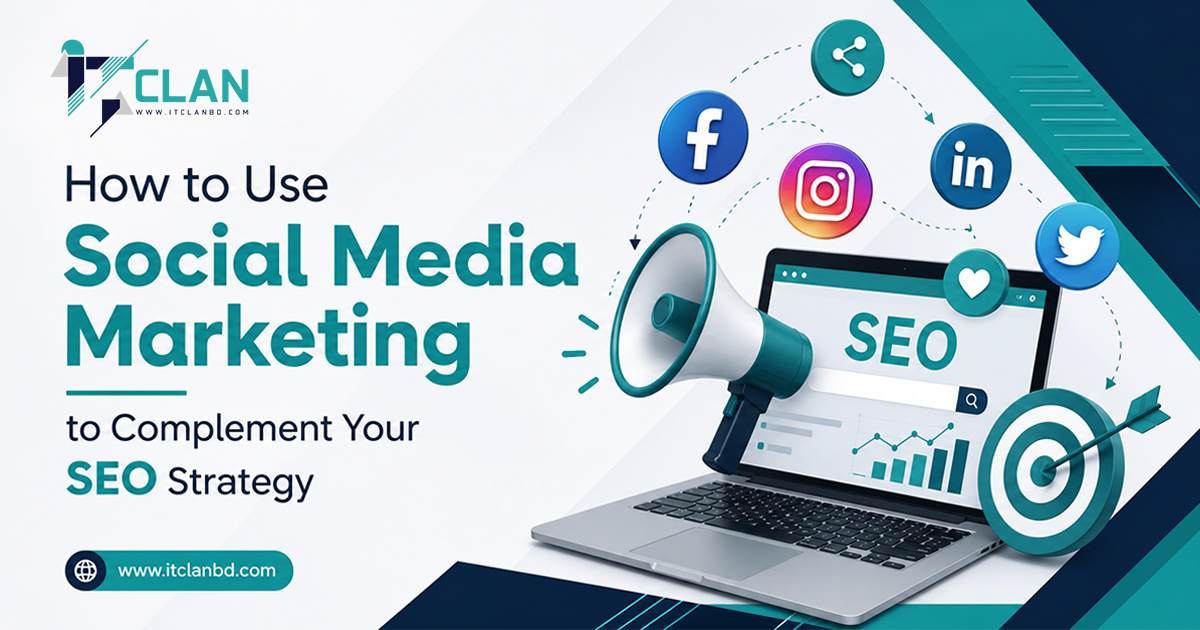
Have you ever wondered why some businesses always seem to appear on Google while also getting plenty of likes, shares, and comments on social media? Here’s the thing! They’re not relying on just one marketing strategy. Instead, they’re combining SEO and social media marketing to build a stronger online presence.
In this guide, we’ll explore how social media marketing complements SEO, why they work so well together, and the best practices you can start using today.
Let’s dive right in!
Let’s break it down!
Search Engine Optimization (SEO) is the process of improving your website so it appears higher in search engine results when people search for products, services, or information related to your business.
The better your SEO, the more likely people are to find your website without paying for ads. Good SEO includes:
SEO is a long-term strategy, but the results are often worth the effort. If you’re new to SEO and want to learn how to optimize your website from the ground up, check out our detailed guide on how to do SEO for a website step by step.
Now, here’s where it gets exciting.
Social media marketing is the process of promoting your business, products, or content through platforms like Facebook, Instagram, LinkedIn, X (Twitter), YouTube, and Pinterest. It helps businesses connect with their audience, build trust, and encourage engagement. It comes under digital marketing services.
Businesses use social media to:
Using the right social media marketing strategies can help you reach more customers and grow your business faster.
This is one of the most common questions businesses ask.
The short answer is no. Google has stated that social media likes, shares, and followers are not direct ranking factors.
However, social media indirectly supports SEO in several important ways. It helps more people discover your content, increases website traffic, encourages backlinks, improves brand awareness, attracts more potential customers, and strengthens your online reputation.
Here’s the scoop! SEO helps people find your business through search engines, while social media helps people discover your brand through conversations, recommendations, and shared content.
When these two strategies work together, they create a stronger digital marketing strategy. Some of the biggest benefits of this powerful strategy are:
Instead of treating SEO and social media separately, successful businesses combine both to maximize their results
Every blog post you publish has the potential to reach more people. When you share your blog on social media, more users can discover your content and visit your website. This helps increase your website traffic and brings new visitors to your business.
Here’s a simple tip: write interesting captions that grab attention and encourage people to click your link. The more people who visit your website, the more chances you have to gain leads, customers, and sales.
Publishing a great article isn’t enough if nobody sees it.
Social media gives your content a much larger audience. Every share, repost, or mention introduces your content to new people who may never have found your website through search alone.
Greater visibility often leads to:
The best part? Your content continues reaching people long after it’s published.
People are more likely to trust businesses they recognize.
By consistently posting helpful content on social media, your brand becomes more familiar to your audience. Over time, people begin searching specifically for your business instead of generic keywords.
Share:
These types of posts help position your business as an industry expert. This increased brand recognition sends positive signals that support your overall digital marketing efforts.
Backlinks remain one of the strongest SEO ranking factors.
Although social media links themselves don’t count as backlinks for SEO, they help your content reach bloggers, journalists, website owners, and industry experts who may link to it from their own websites.
The more useful and shareable your content is, the greater your chances of earning natural backlinks.
Engagement is one of the biggest strengths of social media. When people like, comment, save, or share your content, they help spread it to even more users.
Encourage engagement by:
An active community increases your content’s reach and builds stronger relationships with your audience.
If you run a local business, social media can make it easier for nearby customers to find you.
Keep your business name, address, phone number, and website consistent across all social platforms. Encourage satisfied customers to leave reviews and tag your location in their posts.
Local engagement helps build trust and increases your visibility within your community.
People trust recommendations from real customers more than advertisements. Sharing customer reviews, testimonials, case studies, and user-generated content helps build credibility.
When potential customers see others having positive experiences with your business, they’re more likely to visit your website and become customers themselves. Social proof strengthens your brand reputation, which supports your overall online marketing efforts.
Let’s take a closer look at which social media platforms can give your SEO strategy an extra boost. Every platform serves a different purpose, so choosing the right ones depends on your target audience and business goals.
Facebook is still one of the largest social media platforms for businesses. It helps you share blog posts, engage with your audience, and drive traffic back to your website. Joining relevant groups and encouraging discussions can also increase your content’s reach.
If you run a B2B business, LinkedIn is a must. It’s the perfect platform for sharing industry insights, company updates, and educational blogs. Consistent posting helps establish your business as a trusted authority in your field.
Instagram is all about visual storytelling. While clickable links are limited, you can still direct followers to your website through your bio, Stories, and engaging captions. Eye-catching graphics, reels, and carousels can significantly increase brand awareness.
X is excellent for sharing quick updates, trending topics, and new blog content. Using relevant hashtags and joining conversations helps your content reach a wider audience.
Video content continues to grow in popularity. Publishing helpful videos and optimizing them with keywords can attract long-term traffic from both YouTube and Google search results. Adding your website link in video descriptions also encourages more visitors.
Pinterest works like a visual search engine. Businesses that publish infographics, guides, tutorials, and product images often receive steady, long-term traffic because pins remain discoverable for months or even years.
TikTok is a powerful platform for reaching new audiences through short, engaging videos. Sharing quick tips, behind-the-scenes content, or educational videos can increase brand awareness, drive traffic to your website, and encourage people to learn more about your business.
Remember, success doesn’t come from simply posting content everywhere. You need a strategy that connects your social media efforts with your SEO goals. Follow these best practices to get better results:
Consistency is one of the biggest keys to success. Even small improvements made regularly can produce significant long-term results.
Spoiler alert: It’s easier than you think to avoid common mistakes once you know what to watch for.
Many businesses focus only on posting content but forget to create a complete strategy. Here are some mistakes you should avoid:
Avoiding these mistakes will help both your SEO and social media marketing perform much better.
The right tools can save time and help you make smarter marketing decisions. Some useful tools include:
Using these tools together makes it easier to measure what’s working and improve your marketing efforts over time.
If you’re also planning to build a mobile app, explore the best tools for Android app development to choose the right technologies for your project.
You won’t know whether your strategy is working unless you measure the results. Keep an eye on important metrics like:
Review these metrics regularly and adjust your strategy whenever needed. Continuous improvement is what leads to long-term growth.
No worries, we’ve got you covered! Building a successful online presence takes more than just publishing blog posts or posting on social media. You need a complete digital strategy that combines SEO, social media marketing, web development, content marketing, and ongoing optimization.
At ITclan BD, we help businesses create powerful digital experiences that drive real results. Whether you’re looking to improve your website’s search rankings, build a responsive website, develop custom software, grow your brand through digital marketing, or strengthen your online visibility with professional SEO services, our experienced team is ready to help.
And there you have it! SEO and digital marketing are much stronger when they work together to drive your online success. Instead of treating them as separate strategies, combine them into one powerful digital marketing plan. Create valuable content, share it consistently, engage with your audience, and keep tracking your results. Over time, these efforts can help your business achieve sustainable online growth.
Give these strategies a try and see the difference for yourself. Stay connected for more practical digital marketing tips that help your business succeed.
No, social media is not a direct Google ranking factor. However, it supports SEO by increasing brand awareness, driving website traffic, improving content visibility, and creating more opportunities to earn high-quality backlinks.
The best platform depends on your audience and business goals. LinkedIn works well for B2B companies, Facebook helps drive traffic, YouTube supports video SEO, while Pinterest generates long-term website visits.
Share your new blog when it’s published, then repost it several times over the following weeks using different captions, graphics, or videos to reach new audiences without appearing repetitive.
Yes. Sharing valuable content on social media increases its visibility, making it more likely that bloggers, journalists, and website owners will discover your content and link back to it naturally.
Educational blog posts, how-to guides, infographics, videos, customer success stories, and industry insights perform well because they’re more likely to be shared, drive traffic, and attract valuable backlinks.
Quality Is Our Strength
Have you ever wondered why some businesses always seem to appear on Google while also getting plenty of likes, shares, and comments on social media? Here's the thing! They're not relying on...
Running a small business today is more competitive than ever. People search online first before visiting a store or hiring a service, and if your business isn’t visible in local search re...

In today’s software world, DevOps teams face pressure to release updates quickly without sacrificing quality. Traditional deployment methods often slow things down and introduce inconsist...