Tips
29 Mar, 2026


Our Blog Details
Home / Our Blog Details
Right now, website security is more important than ever. Every day, websites face hacking attempts, phishing attacks, and data breaches that can harm both businesses and users. Even small websites collecting only email addresses are vulnerable to attacks, which can lead to loss of trust and revenue.
SSL certificates are a critical tool that ensures data transmitted between users and websites remains private and secure. They help businesses protect their visitors while also improving trust and credibility online.
In this blog, we will discuss why SSL certificates are essential for website security, their benefits, and all the necessary topics that ensure website security.
An SSL certificate is a digital certificate that encrypts data transmitted between a visitor’s browser and a website. In other words, it converts information into a secure code that is nearly impossible for hackers to intercept.
With SSL, users can safely browse, log in, or complete transactions without worrying about their sensitive information being stolen. The “HTTPS” and padlock icon in the browser bar indicate that a website is secured with SSL.
Whenever a user submits information on a website, it travels across the internet. Without SSL, this data can be intercepted by hackers, putting both users and businesses at risk. SSL encrypts this information so that only the intended website server can decode it.
This encryption makes it nearly impossible for hackers to steal passwords, credit card numbers, or personal information. SSL also prevents man-in-the-middle attacks, where cybercriminals try to alter or intercept data during transmission.
SSL certificates offer several important benefits that directly improve both security and user confidence. By encrypting sensitive information, they ensure data privacy and protect users from cyber theft or hacking attempts. At the same time, SSL builds trust by showing visitors that your website is safe, professional, and reliable to use.
Along with SSL encryption, regular website upkeep plays a huge role in staying secure, check our guide on Why Proactive Website Maintenance Protects Against Security Threats.
Trust is a major factor in website success. Visitors are hesitant to share personal information on sites that appear unsafe or unsecured. Modern browsers actively warn users when they try to visit websites without SSL, often labeling them as “Not Secure.”
SSL reassures users that their data is protected, which improves credibility and encourages engagement. Customers are more likely to complete purchases or submit forms on websites that display the HTTPS padlock icon.
Google officially considers SSL as a ranking factor. Secure websites are preferred in search results because they provide better user experiences.
Beyond rankings, SSL contributes to faster page load, improved Core Web Vitals, and lower bounce rates, all of which positively impact SEO. By securing your website, you signal both Google and users that your website is trustworthy.
Alike this, regular maintenance prevents website outages and offers a smooth, tension-free experience.
For e-commerce websites, SSL is non-negotiable. Customers share sensitive data like credit card numbers, addresses, and contact details. Without SSL, these details can be intercepted by hackers, leading to fraud and loss of trust.
SSL also helps comply with payment gateway requirements and security standards. Online stores that use SSL signal to customers that their data is safe, which reduces cart abandonment.
Not all SSL certificates are the same, and choosing the right one depends on your website type and business needs. Each certificate validates and secures websites at different levels. Choosing the right SSL certificate depends on several important factors related to your website and business needs.
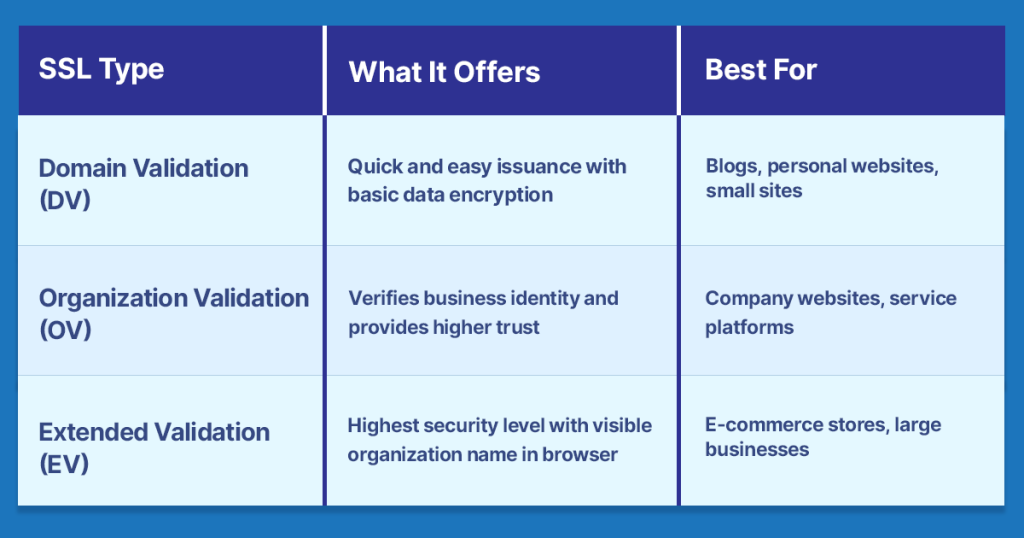
You should consider the size and type of your website, how sensitive the data you collect is, and the level of trust you want to build with visitors. Your long-term business goals and target customer base also play a big role in deciding which SSL option will offer the best protection and credibility.
Running a website without SSL puts your visitors and your business at serious risk. Browsers will warn visitors that the site is “Not Secure,” which discourages them from browsing or sharing information.
Hackers can intercept data easily, leading to stolen personal information and payment details. In addition, Google may downgrade your site in search rankings, impacting traffic and visibility.
Adding SSL to your website has become much simpler in recent years. Many hosting providers now offer free SSL certificates, while premium options provide extra validation and trust.
Installation ensures that data transmitted between users and your website is encrypted and secure. Once installed, your site automatically redirects visitors from HTTP to HTTPS, ensuring a safe connection.
To get the most out of your SSL certificate, there are a few key practices to follow. Always enable automatic renewal to avoid expired certificates, redirect all HTTP traffic to HTTPS to ensure secure connections, and regularly check your SSL status for errors or misconfigurations.
These simple steps help maintain consistent security and keep your website trustworthy for users. Like this, if you want to improve your website visibility, follow some digital marketing strategies.
Many businesses delay implementing SSL due to common myths. These misconceptions can lead to security gaps and lost trust.
SSL is an important layer of security, but it is not the only one. A comprehensive approach to website safety combines multiple protective measures.
Together, these measures ensure a safe and trustworthy website for both business and visitors. While SSL is a critical security layer, long-term protection also depends on proper upkeep. Visit our blog on What to Look for in a Website Maintenance and Support Provider.
SSL certificates have an expiration date, usually 1–2 years. An expired certificate immediately compromises website security and may trigger browser warnings.
Keeping your SSL updated prevents visitors from seeing security alerts and maintains trust. Some certificates also offer higher encryption or additional verification, which can be upgraded over time.
Securing your website with SSL is only the first step; implementing it correctly requires expertise. ITclan BD specializes in modern web development and security solutions, including SSL setup, performance optimization, and ongoing monitoring.
With ITclan BD, businesses get a fast, secure, and reliable website that protects user data, boosts SEO, and builds trust with visitors. From installation to renewal and ongoing maintenance, ITclan BD ensures your website remains secure and fully compliant with modern web standards.
SSL certificates are no longer optional. They are essential for website security, trust, and search engine visibility. They protect sensitive data, reassure visitors, and improve SEO, making them a critical investment for any business.
Securing your website today with SSL ensures long-term growth, credibility, and peace of mind for both you and your visitors.
HTTPS is the secure version of HTTP. It encrypts data transmitted between the user’s browser and the website server, making it safe from hackers. Websites without HTTPS leave user information vulnerable to interception.
While SSL protects data in transit, it does not prevent all types of cyber attacks, such as malware or server hacks. It is one essential layer of a comprehensive security strategy that includes firewalls, malware scanning, and regular updates.
Yes, any website collecting personal data, including emails or contact information, should use SSL. It protects visitors, builds trust, and ensures better SEO ranking, regardless of website size.
Most SSL certificates expire after 1–2 years. Renewing on time prevents browser warnings and maintains secure connections for your visitors. Some providers also offer auto-renewal to simplify this process.
Modern SSL certificates have minimal impact on website speed. In some cases, SSL can even improve performance due to optimized encryption protocols and HTTP/2 support.
Quality Is Our Strength
Right now, website security is more important than ever. Every day, websites face hacking attempts, phishing attacks, and data breaches that can harm both businesses and users. Even small w...

Web users today are impatient, and honestly, for good reason. With so many fast apps and platforms available, nobody wants to wait for slow websites that take forever to load or break on mo...

Mobile devices have changed how people explore the internet. Today, most users visit websites from their phones before they ever touch a desktop. Because of this shift, designing for mobile...